

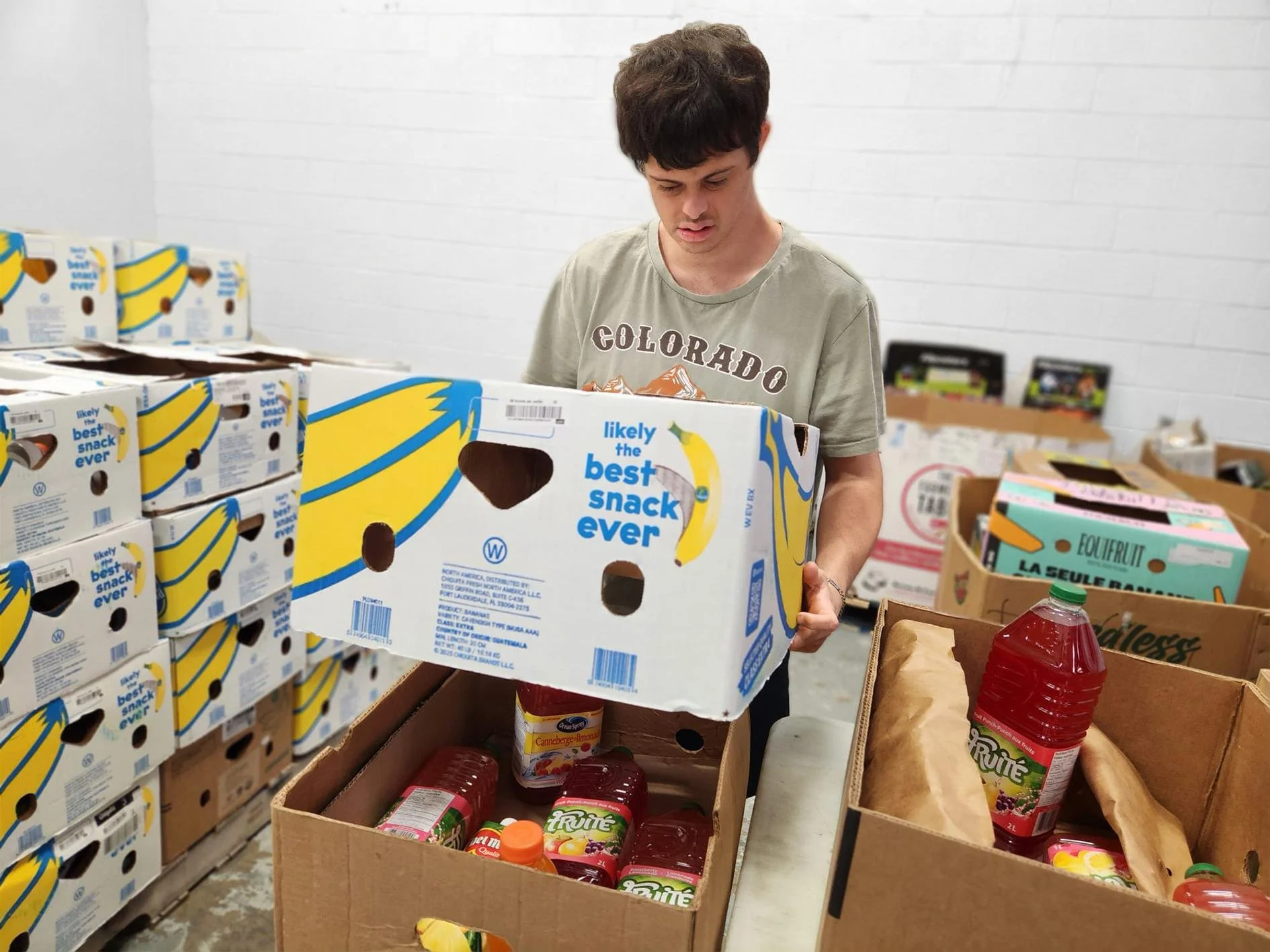
Whether it be volunteering at a food bank or working part-time for a fair wage, our vocational program gives everyone an opportunity to actively contribute to the community.
WHY WE’RE DIFFERENT
Vocation means having a place in the community where you belong. It’s not just about paid work; it’s about being known as someone who shows up, who contributes, who people depend on. It’s about having routines and relationships outside the home. It’s about moving from being invisible or seen only through the lens of disability, to being visible as a person who adds value.
-
Real Placements
Vocation is genuinely embedded in real settings, performing real tasks for real organizations, not in simulated work environments. They are working at actual community sites where their labour matters and their performance is measured against actual standards, not lowered expectations. The consequences are real, which is what makes the work dignified.
-

Real Work
Supervisors provide genuine feedback because they are supervising actual work. When someone earns wages, it is because they are producing output with market value, not because there is a subsidy or a non-profit discount involved. These relationships are significant because they alter how neurodiverse individuals perceive themselves and how they are perceived.
-

Real Solution
If an individual has strong organizational skills but struggles with noise, they may organize materials instead of working a busy retail floor. If an individual doesn’t like transitions, they remain in consistent environments longer. These are not workarounds or accommodations that make the work less real; they are common-sense adjustments that benefit the entire team.
VOCATIONAL ENGAGEMENT BUILDS INCLUSION AND CONNECTION
When neurodiverse adults have a meaningful vocation, the world begins to recognize them as capable and dependable. Employers consider them for their skills and dedication. Neighbours know them as part of the community. Families see their adult child gaining confidence and independence while experiencing well-deserved rest and pride.
A regular role, whether volunteering or earning a wage, changes everything. They are not “special” or “in a program.” They are the person who organizes the books at the library, the one the food bank relies on, the coworker who takes pride in meeting production goals.